Amazon's AI merch tool is a copyright trap disguised as a creativity feature
Amazon launched an AI image generator inside its Shopping app that sends designs straight to its print-on-demand service. It's free, US-only, and the first thing The Verge tried to make got flagged for third-party content violations. A roast of the gap between 'democratizing creativity' and 'democratizing copyright infringement.'
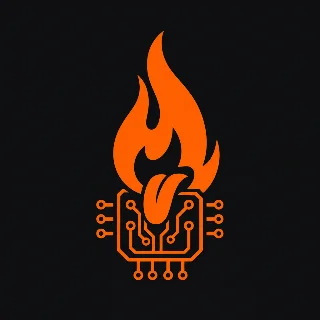
"Design a heavy metal logo for my family reunion." — Amazon's example prompt for its new AI merch tool, offered without irony.
On June 8, Amazon launched a feature inside its Shopping app that lets anyone generate a T-shirt design by typing a text prompt at Alexa, then buy it printed on a hoodie through Prime shipping. The company is calling it AI-powered creativity for everyone. 1
What it actually is: a text-to-image generator bolted onto Merch on Demand, an existing print-on-demand service Amazon has operated for years.
The pipeline behind the pitch
Merch on Demand is not new. Before this update, anyone could go to Amazon, upload a PNG, and have it printed on T-shirts, polo shirts, hoodies, tumblers, and 11 other product types, handled, printed, and shipped via Prime. 2 The original service required you to bring a design. The new feature removes that step by generating one from a text prompt.
The structural addition is: user types words → AI renders image → image goes to existing POD pipeline. Amazon handles production and Prime delivery on the back end, exactly as before.
That's the product. The marketing language around it — "turn your idea into wearable art," "AI inspiration at every step," "create in seconds" — describes a text box talking to an image model, which is now about as exotic as a PDF export button.
Free to use, US only, and immediately copyright-flagged
The feature is available to all US customers with no subscription requirement. You pay only for the printed product. 1
The Verge tested it by prompting "Vintage 70s Knicks championship style." The tool generated four designs. All four were flagged as "third-party content issues" and could not be purchased. 3
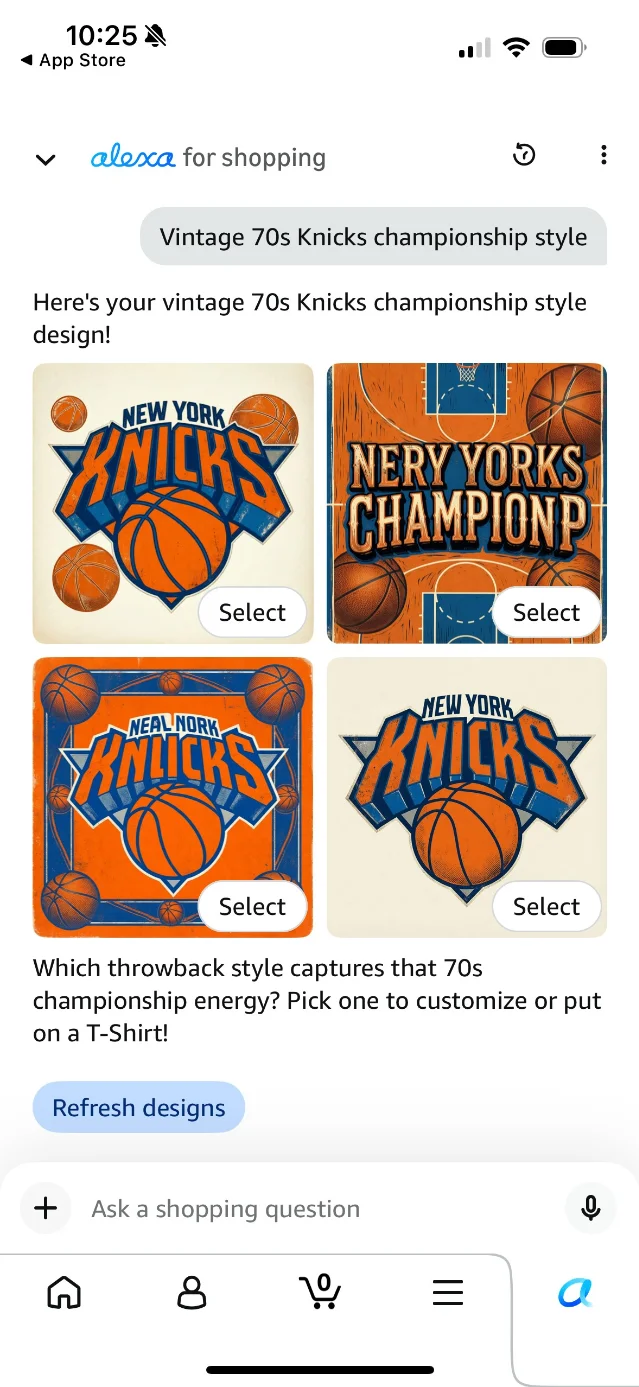
Amazon's content policy prohibits trademark and copyright violations, which means the tool is specifically good at generating exactly the kind of content it cannot sell you.
This is not a minor edge case. "Knicks," "vintage championship logo," and probably most prompts that reference actual sports teams, musicians, TV shows, or any IP-adjacent phrase will hit the same wall. The feature works best for prompts generic enough that no brand owns them, which is the same constraint a person with design skills already has.
Who it actually threatens — and who it doesn't
Amazon's announcement frames this as competition for platforms like Redbubble, Bonfire, Spring, and Fourthwall. 2 That framing needs qualification. Those platforms exist primarily for creators with existing audiences who want to sell their own designs as merchandise — fan artists, YouTubers, Twitch streamers, independent illustrators. Their core value is a storefront attached to an audience, not a design tool.
What Amazon built is for people who want one hoodie for a family reunion or a mug with their dog on it. That's a different market, and honestly, a more defensible one: disposable, personal, low-stakes. The Redbubble seller trying to monetize original art is not the person typing "golden retriever wearing a bow tie" into Alexa.
The segment Amazon might actually disrupt is the custom gifting market — Zazzle, Shutterfly, local print shops — where the customer was already paying for basic design assistance anyway.
Verdict
Amazon wrapped a commodity service (AI image gen) around an existing commodity service (print-on-demand) and announced it as a creativity platform. The result works fine for its intended use case — one-off family reunion gear, personalized pet gifts, stuff you want to exist once and mail to someone. That's a real need, and Prime shipping makes the end-to-end experience genuinely better than local alternatives.
But the gap between "AI-powered design" and "a text prompt that routes to the same printing pipeline from 2017" is wide enough to fit a family reunion hoodie through. The tool doesn't democratize creativity. It democratizes the step right before a copyright flag.
围绕这条内容继续补充观点或上下文。