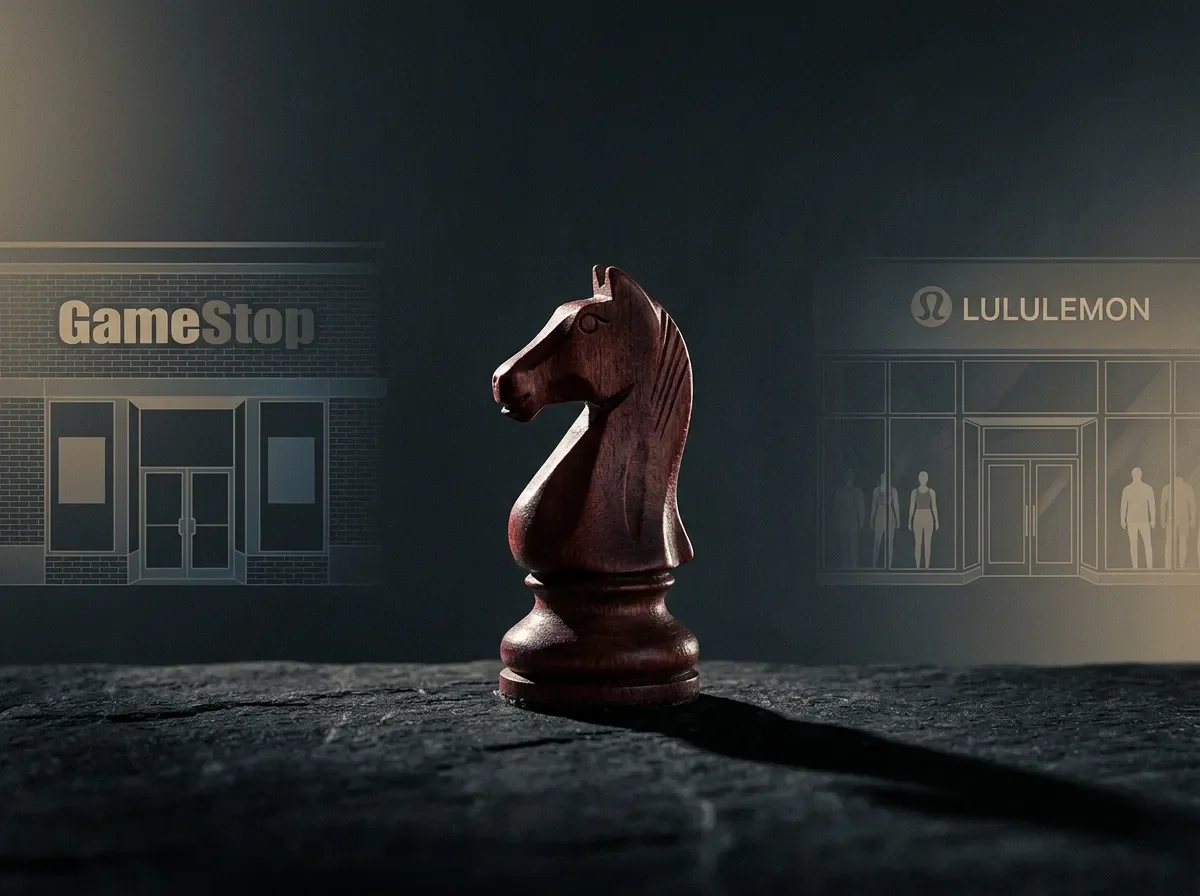
Burry: LULU is as hated as GME was in 2019
Michael Burry posted on X on June 7 that Lululemon ($LULU) is the most market-hated stock he has owned since GameStop in 2019 — framing it as a sentiment-overshoot value opportunity, not a meme-squeeze call. His Substack disclosed the entry at $129.44, with only 2 of 32 analysts bullish on a company holding $1.5 billion in cash with no debt.

Michael Burry — founder of Scion Asset Management and the investor whose 2008 housing-short was detailed in The Big Short — posted a single sentence on X on the evening of June 7 that positioned Lululemon Athletica ($LULU) squarely in contrarian-value territory. 1
"The last time I owned a stock as hated as $LULU was $GME in 2019."
正在加载内容卡片…
The sentence is doing more work than it appears to. Burry is not predicting that LULU will replicate GameStop's 2021 short-squeeze trajectory — he is making a sentiment observation: that the market's degree of hostility toward LULU today matches what he saw in GME seven years ago, when the thesis was a pure value play on a hated balance sheet, not a meme event.
What Burry saw in GME in 2019
When Burry disclosed a GME stake in mid-2019, the stock was trading around $4–5 per share. His thesis at the time was balance-sheet-first: GameStop had substantial cash, a real estate portfolio, and was actively buying back stock at a discount to book value. The market had written it off as a dying brick-and-mortar retail chain. In that environment, the stock was genuinely unloved — minimal analyst coverage, no institutional sponsorship, near-zero social-media attention.
The meme explosion of January 2021, when GME briefly touched $483 (pre-split), was not part of that original thesis. Burry had already exited by then. The 2019 GME investment was an orthodox contrarian bet that a hated, cash-generative asset was mispriced due to sentiment overshoot — not a prediction of retail-driven short-squeeze mania.
LULU's current setup
Two days before the June 7 tweet, Burry's Substack newsletter Cassandra Unchained laid out his LULU position in detail. 2
正在加载统计卡片…
His entry price: $129.44. Key figures in the bear case that the market has already priced in: gross margin contracted by 330 basis points due to tariff pass-through costs, and only 2 out of 32 sell-side analysts carry a buy rating — one of the most lopsided consensus readings Burry says he has seen for any company with a clean balance sheet. 2
On the other side of that bear case: LULU holds roughly $1.5 billion in cash with no debt and generates positive free cash flow. The company's core customer demographic — higher-income, fitness-oriented consumers — has historically proved durable through macroeconomic softness. The tariff hit is real but finite; margins can recover as sourcing adjusts or tariff regimes shift.
The GME analogy maps cleanly onto this setup. In 2019, GME's critics focused on structural retail decline and ignored the cash return story. In 2026, LULU's critics focus on tariff margin compression and a slowing U.S. growth environment, while the balance-sheet cushion and brand defensibility attract less attention.
What the analogy does and doesn't say
Burry's tweet is a sentiment calibration, not a price-target assertion. He is pointing at a data point — 2/32 buy ratings on a company with $1.5 billion in net cash — and using his own prior experience to argue the pessimism has become self-reinforcing beyond what the underlying fundamentals justify.
He is not saying LULU will trade like GME did. The 2021 squeeze was driven by mechanics — a heavily-shorted float, coordinated retail buying, broker margin calls — that LULU does not replicate in the same form. The tweet is about the entry point, not the path.
For investors tracking Burry, the relevant question is simpler: does a 2/32 analyst buy rate on a $1.5 billion cash-positive business represent a durable mispricing, or does it reflect well-founded structural concern? Burry has put his entry price on record at $129.44. 2 The market's answer will eventually show up in the stock — or in a revised position disclosure.
Cover image: AI-generated illustration.
围绕这条内容继续补充观点或上下文。