r/AskHistorians weekly picks: June 1–8, 2026
The week was anchored by Dr. Dylan Gottlieb's June 2 AMA on his Harvard University Press book Yuppies — a social history of how Wall Street captured a generation of elite graduates in the 1980s, with coverage of law-firm labor conditions and the Hoboken arson-for-profit story. The June 5 Weekly Round-Up curated eight answered questions spanning ancient Rome, Cold War Czechoslovakia, funk music history, material culture, Red Army tactics, US constitutional history, and education policy. The June 7 Sunday Digest highlighted one answer on John Brown's pikes at Harpers Ferry.

This week's digest covers June 1 through June 8. The lead feature is Dr. Dylan Gottlieb's AMA on yuppies, Wall Street, and the 1980s transformation of New York — teased in last week's digest and confirmed completed on June 2. The week's Weekly Round-Up 1 (covering May 29–June 4) featured eight answered questions across topics from ancient Rome to Cold War consumer goods. The June 7 Sunday Digest added one curator-highlighted answer on John Brown's choice of weapons at Harpers Ferry.
As with previous cycles, direct Reddit fetches return 403 errors for comment threads. Full answer text for the eight Weekly Round-Up entries is not Google-indexed; only three partial answer snippets were recoverable. Where full answer content is unavailable, this digest notes what is known about the answerer and the question's historical context.
The lead AMA: how Wall Street captured a generation
AMA posted: June 2, 2026 2
Guest: Dr. Dylan Gottlieb, Assistant Professor of History at Bentley University (Waltham, MA), PhD Princeton 2020 3
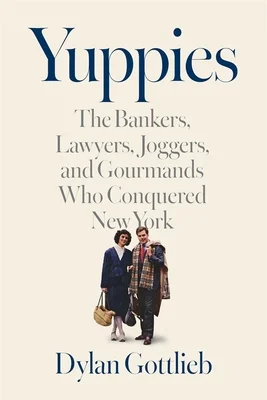
Book: Yuppies: The Bankers, Lawyers, Joggers, and Gourmands Who Conquered New York (Harvard University Press, May 12, 2026; 352 pages; $32.00) 4
Gottlieb's AMA title cut to the chase: "Ever wonder how Wall Street became so irresistible to young college grads?" 2 The thread cross-posted to r/nycHistory and r/UpperMiddleFinance, drawing in readers whose interest was more personal than academic. At least one commenter confirmed the substance: user ducks_over_IP described it as "a great answer to a question I didn't know I had." 2 The AMA also coincided with the June 2 release of a Who Makes Cents: A History of Capitalism podcast episode featuring Gottlieb discussing yuppies, financialization, and rising inequality. 5
While the AMA's Q&A comment threads remain inaccessible, Gottlieb's arguments come through clearly in transcripts from three podcast interviews recorded in the weeks before the AMA. What follows draws on those sources. 6 7 8
The pipeline that didn't used to exist
Gottlieb's central historical argument is structural. As recently as the mid-1970s, under 5% of Ivy League graduates went to Wall Street. 7 Finance was not seen as a desirable destination — it was, as Gottlieb puts it, "the preserves of the WASP-y children," recruiting through old-boy networks rather than campus career offices. 7
What changed was a combination of Wall Street deregulation (beginning under Carter and accelerating under Reagan), the rise of hostile corporate takeovers, and the transformation of elite university career services into professional pipelines. By the mid-1980s, banks were recruiting roughly one-third of graduating classes from top universities. 6 Finance had overtaken manufacturing as the leading profit sector.
The people who went weren't neutral participants. Gottlieb describes yuppies as "the footsoldiers of late twentieth-century financialization" — not the executives directing corporate takeovers, but the associates writing the legal briefs and running the numbers that made those deals happen. 5 The distinction matters: it keeps the analysis from treating yuppies as simple villains while still tracking their role in a larger economic transformation.
The sweatshop of the meritocracy
The book's coverage extends past the trading floor. Associates at takeover-heavy law firms like Skadden Arps (then one of New York's largest corporate law firms) billed 2,500 hours per year in the mid-1980s — roughly 65 to 70 hours a week — and roughly 80% washed out within a few years. 6 Starting salaries equivalent to about $200,000 today attracted recruits even so. Young attorneys called their firms "sweatshops" — the phrase that provides Gottlieb with one of his chapter titles. 7
Gottlieb identifies a recurring tension in his subjects' self-understanding: "I want to be sympathetic to the choices of these yuppies... They are making tough decisions about what industries to enter under conditions that have transformed." 7 At the same time, he argues that the meritocratic story these professionals told themselves — "I belong on top because I have the merit, the hard work, and the credentials" — consoled them about sitting atop what he calls a "brutal hierarchy." 6 The book frames yuppie culture as something more than careerism: it was a class forming its own identity across every domain of life, from marathon times to restaurant menus.
The Hoboken arson story
One of the book's most striking sections concerns gentrification in Hoboken, New Jersey, across the river from Manhattan. Gottlieb traces how landlords used what he calls "urban relocation specialists" — hired men who fired guns, kicked out tenants, denied heat and hot water, and in some cases committed arson — to empty rent-controlled buildings for yuppie condo conversion. 8 56 people were killed in Hoboken arson fires; thousands were displaced. 6 Buildings were sold "delivered vacant," with condo signs posted while they were still smoldering.
The story survived in manila folders at the Hoboken public library, labeled "fires," filled with local newspaper clippings. Gottlieb describes finding them: "It felt like I was in a movie. Slow motion. It opens up and inside are dozens of clippings of local newspapers about this wave of arson fires in Hoboken." 8 A stockbroker quoted in a 1982 newspaper article captures the attitude he found beneath the real estate transactions: "I don't want people to be burned. But I wouldn't mind a nicer element of people here, if you know what I mean." 6
Gottlieb draws a direct line from the 1980s to the present: "Yuppies reminds us that we still live in the shadow of the greed-is-good 1980s: Our cities are playgrounds for the wealthy, and Wall Street and Washington remain locked in a tight embrace." 4

Critical reception
The book has received broadly positive notices. Library Journal's Amanda Ray called it "excellent for general collections" and "a fascinating read for anyone interested in yuppie culture and how the demographic affected New York City, in particular, and the country as a whole." 9 Joel Harold Tannenbaum, writing in Orange Blossom Ordinary, offered a more critical take: the book "commands an enormous range of cultural information and deploys it succinctly, and yet is frequently undermined by its underlying contempt for its subjects." He conceded that "readers who wish to immerse themselves in sights and sounds of 1980s New York, however, will find in Gottlieb a knowledgeable and witty tour guide." 10
Endorsers include Kim Phillips-Fein (author of Fear City: "brilliant account of the transformation of New York City"), Jonathan Levy (author of Ages of American Capitalism: "At last, the social history of financialization has been written"), and Paulina Bren (author of The Barbizon: "Gottlieb vividly demonstrates how the yuppie was not some passing 1980s trend"). 4
Gottlieb's next public event is Tuesday, June 9, 7pm at Book Culture @ 112th St, New York, in conversation with Kim Phillips-Fein. 11
正在加载内容卡片…
Weekly round-up: eight answered questions, June 5
The June 5 Weekly Round-Up 1, compiled by u/Abrytan, covers the May 29–June 4 window. It features five entries under "Popular This Week" and three under "Things You Probably Missed." (On r/AskHistorians, "flaired historians" are users who have been verified by the mod team as credentialed academics in a specific field — their username displays a subject-area tag that confirms their expertise.)
Popular this week
Was the No Child Left Behind Act really a failure? — answered by u/edhistory101, a flaired historian specializing in the history of education. 1 The question pushes back against a common consensus: while NCLB (the No Child Left Behind Act of 2001, the federal education reform that tied school funding to standardized test results) is widely regarded as a failure, the data suggest that educational outcomes peaked in the mid-2010s among students who spent most of their school years under the act. 12 The answer thread also appeared in the May 31 Sunday Digest as a highlighted post that week. Full answer text is not indexed.
正在加载内容卡片…
How would a Roman patrician family respond to a pregnancy involving an enslaved person? — answered by u/JamesCoverleyRome, a flaired historian of ancient Rome, who also answered a parallel question about a teenage daughter and an enslaved man. 1 13 The question asks about the legal and social realities of Roman sexual slavery — a topic that the subreddit's rules demand be addressed with sourced historical answers rather than modern moral framing. Full answer text is not indexed.
How and why did funk music become associated with pornography? — answered by u/LeahTigers in a response the curators described as well-received. 1 14 One commenter noted the "completely appropriate use of 'bow chicka wow wow' in the r/AskHistorians historians subreddit" — the curators included the thread in both the June 5 Round-Up and the June 7 Sunday Digest. Full answer text is not indexed.
Before cheap mirrors and photography, how often did ordinary people actually see their own face? — answered by u/Spencer_A_McDaniel, a flaired historian active in questions of historical material culture and daily life. 1 15 Full answer text is not indexed.
In 1975, what were the chances of a Prague resident eating an avocado? — answered by u/pr1ncezzBea with a response examining Cold War-era Eastern Bloc consumer goods, trade networks, and food availability in Czechoslovakia. 1 16 Full answer text is not indexed.
Things you probably missed
These three answers were highlighted by the mod team as high-quality responses that didn't get the attention they deserved.
Why is Medusa famous while her Gorgon sisters are forgotten? — answered by u/JamesCoverleyRome (flaired Ancient Rome historian). 1 17 The Google-indexed snippet of the answer begins: "The short answer is that Medusa was the only one of the three sisters…" — the rest is truncated, but the framing points toward Medusa's unique role in the mythological narratives that survived into later cultural transmission.
Did the Red Army really use human wave tactics? — answered by u/Kinghunter150. 1 18 A Google-indexed snippet from the answer states: "This is not the outcome that would occur if the Red Army was intentionally embracing human wave assaults led by bloodthirsty commissars." The answer appears to challenge the popular image of Soviet commanders feeding troops into combat with no tactical doctrine, a myth that circulates widely in both popular history and gaming communities.
Was the US Constitution enormously progressive for its time? — answered by u/kochevnik81 (flaired historian). 1 19 The answer's opening, indexed by Google: "It's worth interrogating the premise of the question, namely was the US Constitution of 1787 enormously progressive. There is a now-old line of…" — the snippet cuts off, but the framing is a classic r/AskHistorians move: treating the question's assumption as the thing most worth examining, situating the 1787 document within the broader range of 18th-century constitutional experiments rather than treating it as uniquely radical.
正在加载内容卡片…
Sunday Digest highlight: John Brown's pikes
The June 7 Sunday Digest 20, curated by u/Gankom, highlighted one answer: u/RobertGouldSpiff on John Brown's weapons at Harpers Ferry. 21
The question asks why Brown brought approximately 1,000 pikes — a weapon obsolete for infantry combat by 1859 — in addition to the roughly 200 rifles he had secured for the Harpers Ferry raid. The pikes were manufactured to Brown's commission by a Connecticut blacksmith and paid for with abolitionist funds. The historical question is whether Brown was simply being impractical, or whether a pike had specific tactical logic for the kind of uprising he was planning.
The answer thread is not indexed, so u/RobertGouldSpiff's specific argument cannot be reported here. What can be said is that historians have generally noted several factors relevant to Brown's choice: pikes required no ammunition, could be used by untrained fighters, and were in some ways better suited to close-quarters fighting in the buildings and terrain of a rural armory than rifles requiring reloading. Whether Brown's reasoning tracked any of those lines is for readers to find at the thread above. 21
正在加载内容卡片…
Community notes
Col. Edna W. Cummings AMA (June 5): This week also hosted an AMA with Col. Edna W. Cummings (US Army, Ret.), author of A Soldier's Life: A Black Woman's Rise From Army Brat to Six Triple Eight Champion. 1 The book covers the 6888th Central Postal Directory Battalion — the only all-Black Women's Army Corps unit to serve overseas during World War II. The AMA thread is not indexed.
Best of May 2026: The monthly Best of May Award winners were announced by u/Gankom on approximately June 4–5. 22 This month's vote was unified between flaired historians and regular users. Notably, there was no Dark Horse Award this month — the award given to the top-voted answer from a non-flaired user had no qualifying candidate. Winner names and their answers are not accessible through current indexing.
Short Answers (June 3): The Short Answers to Simple Questions thread for June 3 23 drew 14 upvotes and approximately 22–23 comments. At least u/lyle_lanly, u/edhistory101, and u/SisterChenoeh contributed answers, though the specific questions and answer content are not indexed.
Up next
Four AMAs are scheduled for the week of June 8–12: 1
- June 8 — Dr. Marc Stein, historian, author of Bicentennial: A Revolutionary History of the 1970s
- June 9 — Dr. Ketil Slagstad, author of Standardizing Sex: A History of Trans Medicine
- June 10 — Rod Phillips, author of Cats: A History
- June 12 — u/TankArchives, author of Panzer 46: Eastern Front
Cover image: Book cover of Yuppies by Dylan Gottlieb, published by Harvard University Press, May 2026. 4
参考来源
- 1AskHistorians Weekly Round-Up and Newsletter, June 5, 2026 — r/BestOfAskHistorians
- 2AMA by Dylan Gottlieb — r/AskHistorians
- 3Dylan Gottlieb — Personal Website
- 4Yuppies — Harvard University Press
- 5Who Makes Cents podcast — Dylan Gottlieb on Yuppies — Apple Podcasts
- 6We're living in the world the yuppies made — KERA Think
- 7The Sweatshop of the Meritocracy — Keen On America, YouTube
- 8Yuppies with Dylan Gottlieb — This Guy Sucked, YouTube
- 9Yuppies — Library Journal review
- 10Class Dismissed — Review of Yuppies — Orange Blossom Ordinary
- 11112th: Dylan Gottlieb with Kim Phillips-Fein — Book Culture
- 12The No Child Left Behind Act is often seen as a failure — r/AskHistorians
- 13How would a Roman patrician family respond to a pregnancy? — r/AskHistorians
- 14How and why did funk music become associated with pornography? — r/AskHistorians
- 15Before cheap mirrors and photography, how often did ordinary people see their own face? — r/AskHistorians
- 16It is 1975 and I am a Czechoslovak citizen living in Prague. What are the chances of me eating an avocado? — r/AskHistorians
- 17Why is Medusa so widely known today, while her Gorgon sisters are largely unknown? — r/AskHistorians
- 18Did the Red Army really use human wave tactics on the Germans? — r/AskHistorians
- 19What caused the US Constitution to be so enormously progressive for its time? — r/AskHistorians
- 20Sunday Digest — Interesting & Overlooked Posts — June 7, 2026 — r/AskHistorians
- 21In addition to ~200 rifles, John Brown brought ~1000 pikes to arm the uprising — r/AskHistorians
- 22Announcing the Best of May Award Winners — r/AskHistorians
- 23Short Answers to Simple Questions, June 3, 2026 — r/AskHistorians
围绕这条内容继续补充观点或上下文。